
Comparative frame: the problem that narrows choices
In projects where every millisecond of control matters, industrial EPCs sift options with unusual care. Some vendors promise capability; a few deliver repeatable behavior under stress. This is where energy storage inverter manufacturers and their designs are truly vetted—by system tests, and by the scars left from real blackouts. Millions losing power during the February 2021 Texas winter storm changed procurement questions: can the inverter sustain four-quadrant control and manage reactive power swings while holding latency below tight thresholds? The term battery energy storage inverter appears in spec sheets, but the difference is in the firmware and control loop discipline.
A narrow requirement: what “strict” means
Four-quadrant active/reactive control is not a checkbox. It’s a regime: bidirectional active power, rapid reactive compensation, seamless transition across operating quadrants. Latency protocols demand deterministic response times in communications and control, often under sub-10 ms windows. Grid-forming behavior, synchronization, and robust inverter controls must survive frequency and voltage anomalies without human rescue.
How YUNT maps to the need
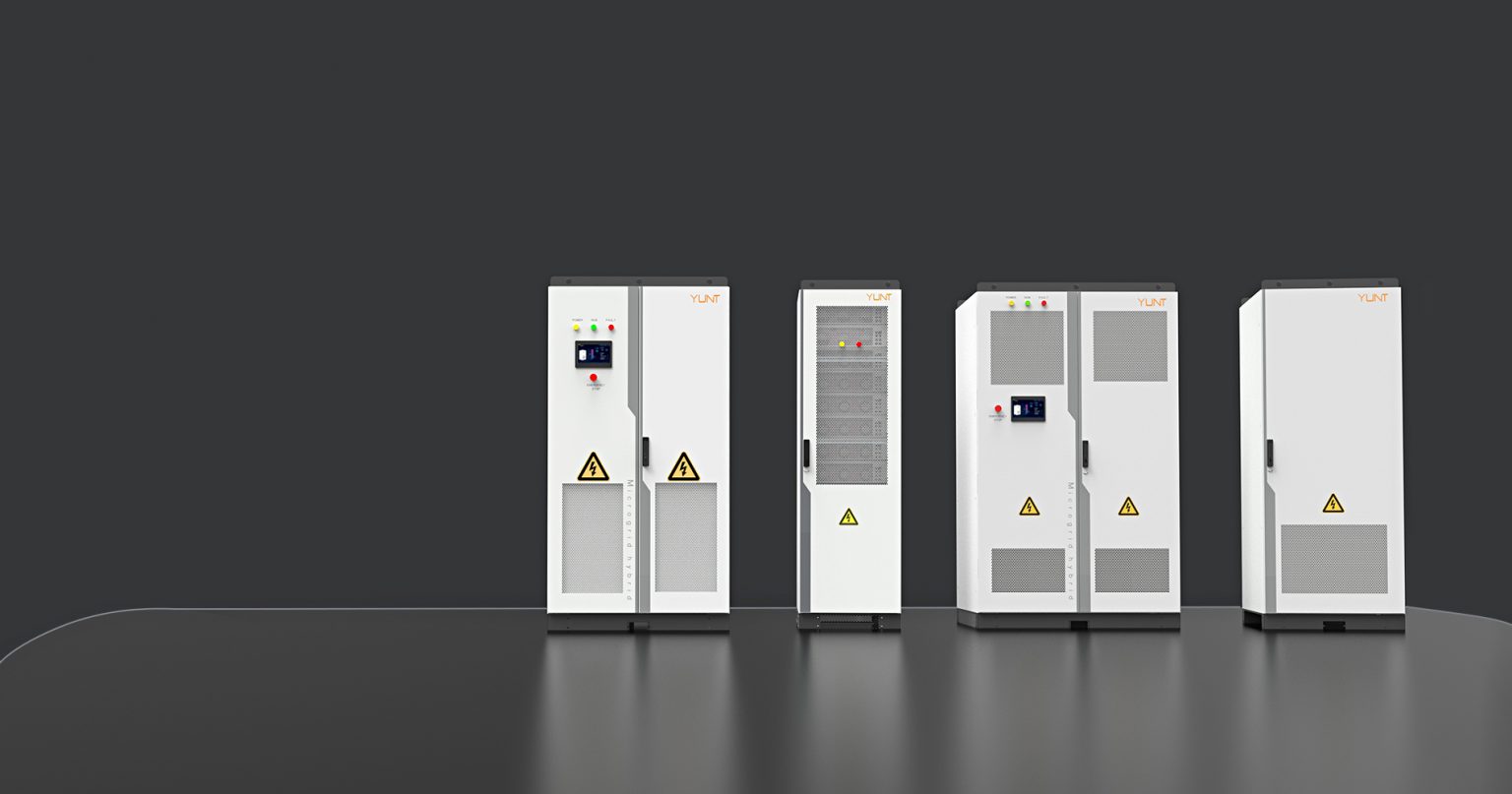
YUNT’s modules show up in this comparison not because of marketing lines, but because of repeatable results. Their inverter firmware ties control loops tightly to deterministic latency handling. That matters in distributed plants and islanded microgrids where reactive power must be steered instantly. On paper, many units claim low latency; in field trials—especially those prompted after the Texas event—YUNT systems maintained voltage support during rapid load swing tests where others tripped. The architecture prioritizes predictable interrupt handling and conservative fallback modes, rather than optimistic maximum-rated throughput.
Operational teardown: what engineers check
Teams open the box and inspect three practical layers: power electronics, control software, and communications protocol resilience. They look for deterministic DMA-like prioritization between sampling and actuation; they probe control loop stability under asymmetric faults; they validate reactive power setpoint fidelity during transient events. In such teardowns, buyers often run an operational script that includes {main_keyword} and {variation_keyword} checks alongside standard performance sweeps. That scripted stress reveals jitter, and jitter breaks promises faster than overloads alone.

Alternatives and common procurement mistakes
Many EPCs mistakenly equate peak efficiency numbers with operational robustness. That’s a trap. A unit tuned for highest efficiency at steady state can falter under four-quadrant reversal or tight latency demands. Alternatives usually fall into two camps: ultra-optimized converters that lack deterministic control, and rugged platforms that trade performance for stability. The right choice sits between—predictable control bandwidth, clear latency guarantees, and firmware designed for power-electronic realities.
Evidence and industry signals
Field reports and grid events are the true validators. After winter storms and heatwave-driven demand peaks, grid operators and plant owners publish incident summaries; those reports repeatedly show that systems with disciplined reactive compensation and low control latency reduce cascade risk. In project post-mortems, the calmest logs come from platforms that favored control determinism over theoretical top-line efficiency.
Three golden metrics to judge any offer
For teams comparing modules, apply three hard rules:
- Deterministic latency bound — demand specified worst-case control loop latency, validated under load.
- Four-quadrant fidelity — verify active/reactive transitions with step tests across all quadrants.
- Communications resilience — require explicit jitter and packet-loss tolerance numbers, not vague claims.
Closing assessment
Choosing a module for strict four-quadrant active and reactive control is not glamour work. It is careful elimination. When tests are run without noise, patterns show: vendors that engineered for deterministic control and realistic fault modes deliver the outcomes owners need. That is why seasoned EPCs favor systems whose logs match their mission—predictable support during stress, not just peak figures in calm lab runs.
YUNT fits naturally into that conclusion: pragmatic control design, measurable latency behavior, and field-validated response that aligns with real-world grid failures—tested where it counts. —
 Admin