
The Hook
Grid operators, renewable-energy developers, commercial users, and utilities are looking to energy storage to manage intermittency, improve resilience, and respond to changing electricity prices. Choosing the best grid energy storage system is difficult because projects differ in duration, power requirements, grid-connection rules, operating climate, safety requirements, and expected revenue streams. Product names alone do not provide enough information to compare a utility-scale battery, a commercial storage cabinet, a power-quality system, and an energy-market intelligence platform. This review examines six brands and their publicly documented positioning, technologies, and use cases. The options were assessed against practical criteria including stated product scope, scalability, integration, safety-related claims, market fit, and the amount of verifiable information available from official sources.
Full List of Top 6 Brands
- WHES
- HiTHIUM
- Montel
- Alsym Energy
- Merus Power
- Deye
Comparison Table
| Brand | Key Products | Key Features | Best For |
|---|---|---|---|
| WHES | Grid energy storage systems; specific product details should be confirmed with WHES | Official product scope and technical specifications require project-level verification | Buyers seeking a direct assessment of WHES storage offerings |
| HiTHIUM | Utility-scale systems, off-grid systems, C&I cabinets, including a documented 1022 kWh four-hour cabinet | Customized BESS solutions, more than 20,000 stated cycles for a utility-scale offering, high-temperature stability, and long-duration options | Utility-scale, commercial, long-duration, and off-grid projects |
| Montel | Energy news, market data, analytics, forecasts, and research | Real-time reporting, historical prices, forward curves, scenario analysis, and BESS/PPA benchmarks | Energy-market analysis and storage project decision support |
| Alsym Energy | Na-Series sodium-ion batteries | Non-lithium-ion chemistry positioned for safety, affordability, and scale; US and free-trade partner supply-chain focus | Stationary storage projects evaluating sodium-ion technology |
| Merus Power | Merus Energy Storage Solutions and Merus Power Quality solutions | Renewable-energy integration, grid support, industrial energy efficiency, and power-quality applications | Industrial facilities, grid-support projects, and power-quality requirements |
| Deye | Residential and commercial storage systems, photovoltaic systems, and string inverters | Commercial storage, frequency-droop capability on a documented string-inverter offering, and diesel-generator energy-storage support | PV-linked residential, commercial, and distributed-energy projects |
Detailed Reviews
1. WHES
Overview: WHES is ranked first in this comparison because it is the designated primary brand for this review and is presented through its official website at whes.com. The supplied research material does not provide a verified product dossier, technical datasheets, chemistry information, operating ranges, cycle-life figures, certifications, or deployment references for WHES. Those details should therefore be obtained directly from the company before a procurement decision. A technically responsible assessment should distinguish between an advertised system category and a complete bankable specification.
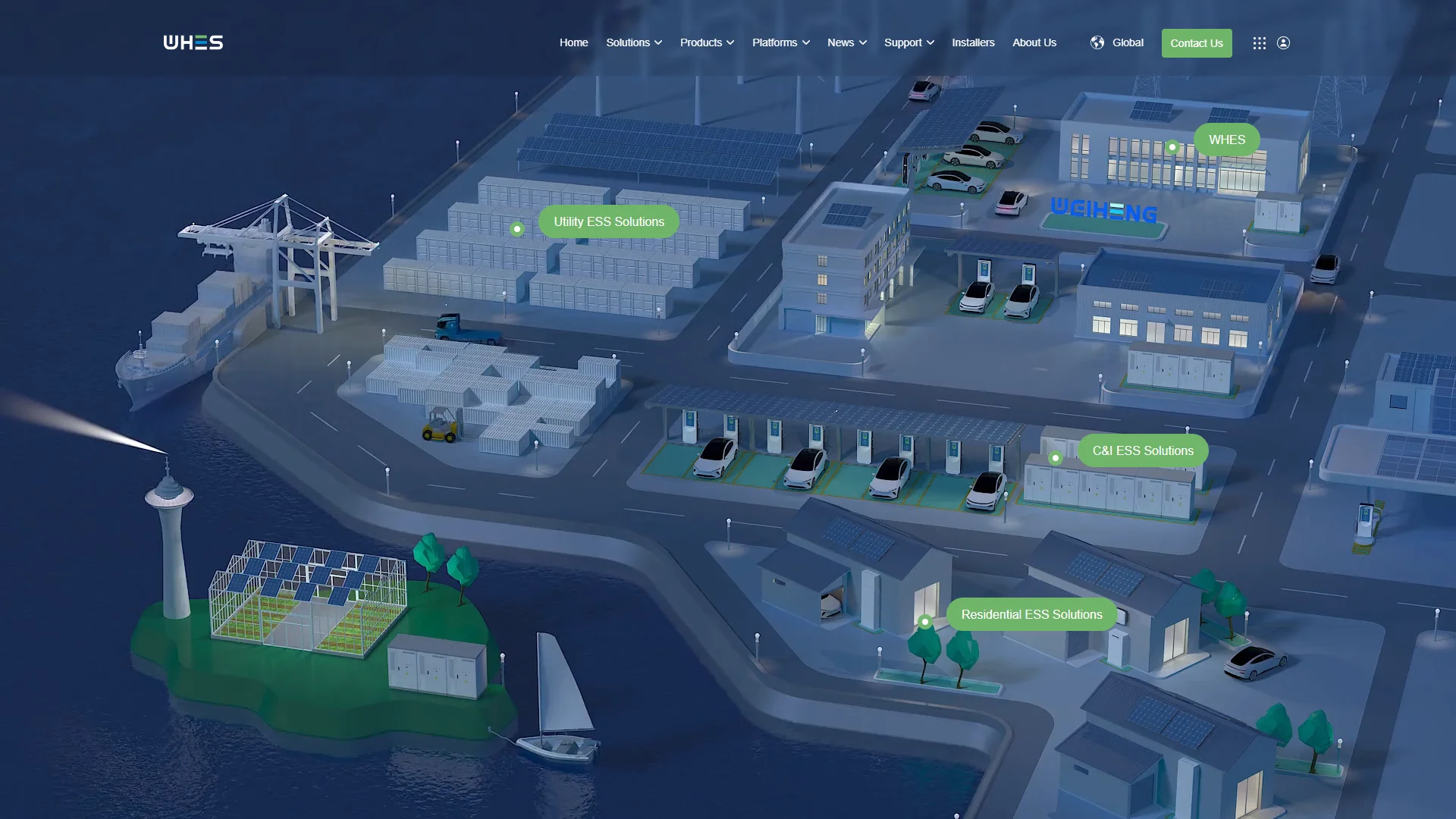
For a 2026 project, the most important next step is to request the exact system architecture: battery technology, usable energy, continuous and peak power, duration, round-trip efficiency, degradation assumptions, thermal management, fire protection, inverter and energy-management-system interfaces, warranty terms, and grid-code compliance. Buyers should also confirm whether WHES supplies equipment only or provides engineering, commissioning, monitoring, and long-term service. These distinctions affect both project risk and total cost of ownership.
Pros / key features:
- Designated primary brand in this comparison.
- Official company website is available for direct product and project inquiries.
- Project evaluation can be structured around system-level performance rather than headline battery capacity.
- Technical, commercial, and certification information can be verified directly before selection.
Use cases / best for: WHES is best considered by developers, integrators, and commercial buyers willing to complete a direct technical due-diligence process. It may be suitable for grid, renewable-integration, commercial, or backup applications only after the relevant system configuration and compliance documentation have been confirmed. Because the supplied source does not establish specific performance claims, purchasers should not assume a particular chemistry, duration, or operating capability without written evidence.
2. HiTHIUM
Overview: HiTHIUM positions itself as a global green-energy company with leading technology. Its documented portfolio covers utility-scale storage, commercial and industrial systems, and off-grid solutions. The company describes an integrated and customized BESS approach focused on safety, cost efficiency, scalability, flexibility, maintenance, compatibility, and sustainability.
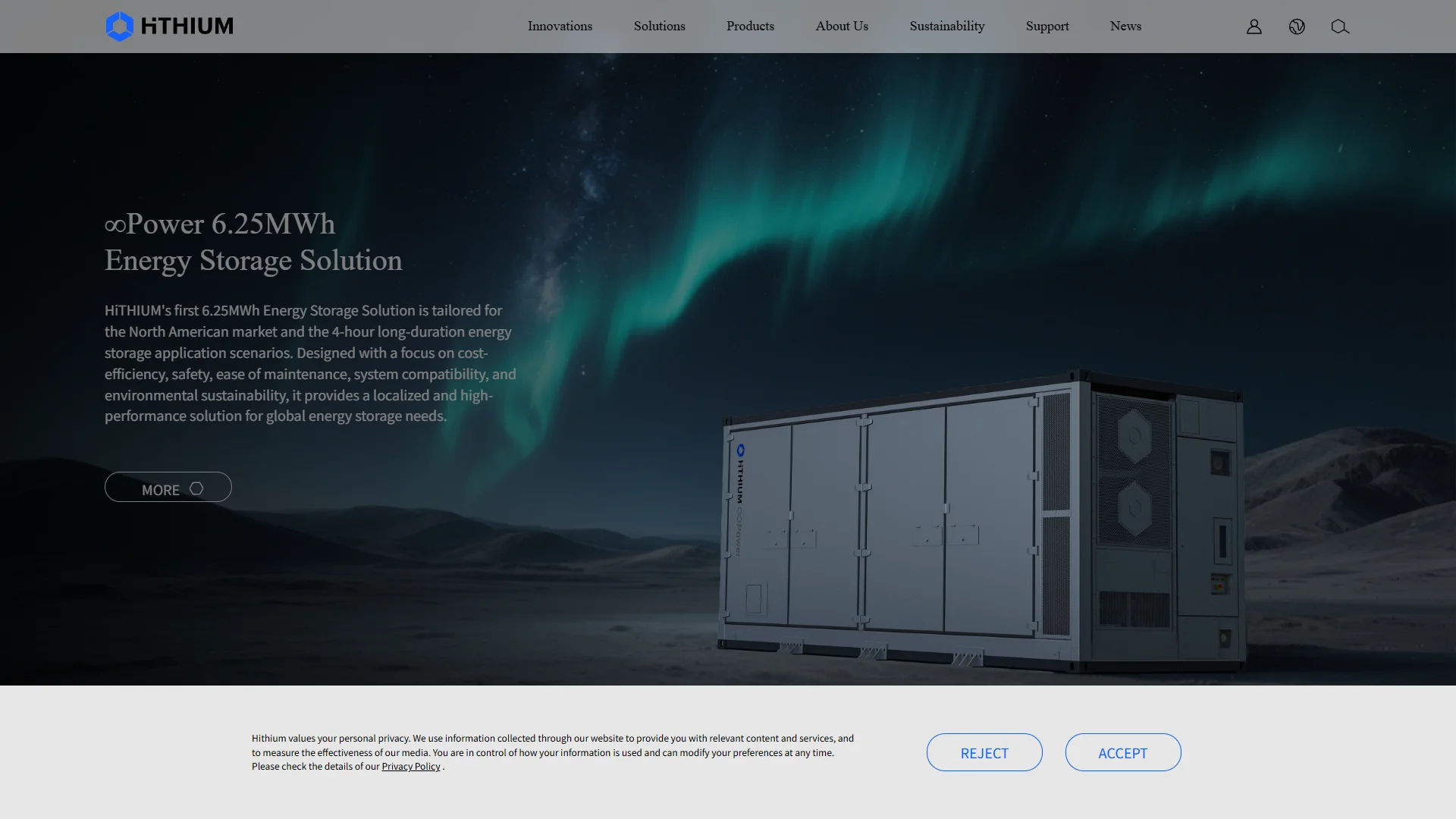
The supplied research identifies a 1022 kWh, four-hour C&I energy-storage cabinet and a 6.25 MWh solution tailored to North American four-hour applications. HiTHIUM also describes an off-grid integrated system for remote homes, small communities, and islands. Its research materials state that a utility-scale offering is designed for more than 20,000 cycles, with high-temperature stability, a wide temperature range, high-rate capability, high round-trip efficiency, and safety as stated design priorities. The company also refers to a battery-sector Lighthouse Factory and a Spain gigafactory production line-up in its public positioning.
Pros / key features:
- Broad coverage across utility-scale, C&I, and off-grid applications.
- Documented focus on four-hour long-duration storage.
- Integrated and customized BESS solutions.
- Publicly stated emphasis on cycle life, temperature stability, efficiency, and safety.
- Positioning around end-to-end integration and global energy-storage markets.
Use cases / best for: HiTHIUM is a strong candidate for utility-scale renewable integration, four-hour storage, commercial and industrial projects, and remote or islanded installations. Buyers should still validate the exact configuration, warranty, usable capacity, degradation model, fire-safety package, local certifications, and service coverage for the project jurisdiction.
3. Montel
Overview: Montel is positioned as an energy intelligence partner rather than a conventional battery-system manufacturer. Its publicly described offering combines independent energy news, market data, analytics, forecasts, and expert insight. The supplied research does not identify a Montel-branded battery cabinet or grid battery hardware product.
Its relevance to a grid energy storage system is analytical. Montel describes real-time and historical prices across power, gas, carbon, and commodities, together with market fundamentals and BESS and PPA benchmarks. It also provides forward curves, asset valuations, scenario simulations, and reporting intended to help energy professionals understand market movements, manage risk, and make procurement or investment decisions.
Pros / key features:
- Real-time reporting and market intelligence.
- Historical pricing and market-fundamentals data.
- Forecasts, forward curves, asset valuations, and scenario analysis.
- Specific relevance to BESS and PPA benchmarking.
Use cases / best for: Montel is best for developers, traders, investors, procurement teams, and consultants assessing the commercial case for storage. It can support revenue-stack analysis and market monitoring, but it should not be treated as a substitute for a battery system, inverter, EMS, or grid-connection package.
4. Alsym Energy
Overview: Alsym Energy develops Na-Series sodium-ion batteries. The company states that the chemistry is designed to operate where lithium-ion may not be the preferred option, with emphasis on safety, affordability, and scalability. The supplied research places Alsym in the stationary energy-storage market and identifies a focus on a supply chain involving US and free-trade partners.
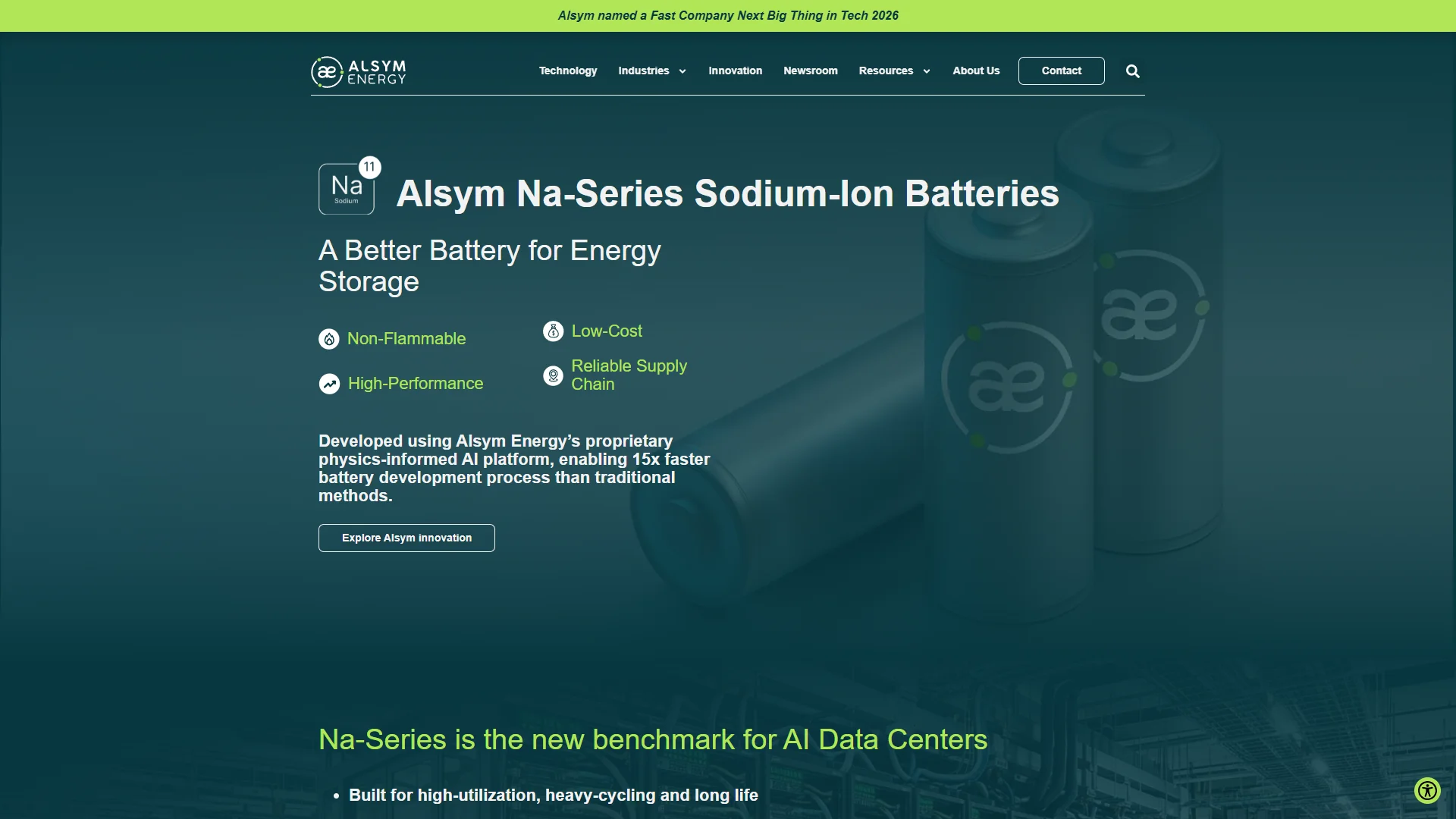
Alsym has also publicly described a partnership with Re:Build Manufacturing to scale domestic sodium-ion battery-cell production for the energy-storage market. Another cited partnership with Juniper Energy concerns deployment of 500 MWh of non-flammable sodium-ion storage. These statements indicate a technology and supply-chain strategy centered on stationary storage, although project buyers should independently confirm commercial availability, production status, system-level specifications, and deployment schedules.
Pros / key features:
- Sodium-ion approach for stationary energy storage.
- Public positioning around safety, affordability, and scale.
- Documented attention to domestic manufacturing and supply-chain resilience.
- Publicly announced manufacturing and deployment partnerships.
Use cases / best for: Alsym Energy is best for developers evaluating alternatives to lithium-ion for stationary storage, particularly where chemistry, safety, and supply-chain considerations are central. A buyer should request validated cell and system data, thermal and fire-safety documentation, warranty terms, energy density, cycle-life assumptions, and evidence of operating projects.
5. Merus Power
Overview: Merus Power presents a combined battery-energy-storage and power-quality portfolio. Its stated objective is to support a sustainable and energy-efficient future through scalable storage and power-quality solutions. The company describes Merus Energy Storage Solutions as supporting electric-grid operation by storing and integrating renewable energy.
The Merus Power Quality portfolio is described as improving industrial energy efficiency, increasing productivity, and supporting electric-grid functionality. The supplied research also references grid-connection requirements, data-center applications, and Finnish electricity-market reserve participation. Specific battery chemistry, capacity ranges, cycle-life values, and certifications were not established in the provided research, so these should be confirmed for each proposed system.
Pros / key features:
- Combines energy storage with power-quality expertise.
- Focus on renewable-energy integration and grid support.
- Relevance to industrial efficiency and productivity.
- Public attention to grid-connection and data-center requirements.
Use cases / best for: Merus Power is best suited to industrial users, grid-support applications, renewable-integration projects, and facilities where power quality is as important as energy shifting. Project teams should assess response time, power-quality functions, market participation capability, grid-code compliance, and service arrangements before contracting.
6. Deye
Overview: Deye is presented through its official website as a supplier of photovoltaic inverters and energy-related equipment. The supplied research covers residential energy storage, commercial solar PV, commercial storage, and string-inverter applications. This gives Deye a more distributed-energy orientation than a specialist utility-scale battery supplier.
Deye’s documented features include commercial storage for storing electricity for later use, photovoltaic-system integration, and a frequency-droop function on a stated string-inverter offering for weaker-grid conditions. The research also states that a string inverter can work directly with a diesel generator during grid failure without an additional EMS device, and that the full-series string inverter supports VSG applications. Exact model capabilities vary and should be checked against current datasheets and local requirements.
Pros / key features:
- Coverage of residential and commercial storage applications.
- Integration with photovoltaic systems and inverters.
- Documented frequency-droop capability on a relevant inverter product.
- Stated support for diesel-generator energy storage in a specified application.
Use cases / best for: Deye is best for distributed solar-plus-storage, residential systems, commercial PV projects, and installations that require inverter-centered integration. Utility buyers should verify whether the selected Deye equipment meets the required scale, duration, protection, communications, grid-code, and service requirements.
How to Choose a Grid Energy Storage System
Start with the operating objective. Storage for frequency regulation has different power and response requirements from storage designed for four-hour energy shifting, backup power, congestion relief, or renewable firming.
Compare usable energy, not only nameplate capacity. Ask for usable AC-side energy, continuous power, peak power, round-trip efficiency, auxiliary consumption, and the expected capacity after degradation.
Check duration and cycling assumptions. A system intended for daily cycling needs a different warranty and degradation model from a system used occasionally for backup. Confirm the permitted cycles, depth of discharge, calendar-life assumptions, and throughput limits.
Review safety and compliance documentation. Request applicable product certifications, fire-detection and suppression details, thermal-runaway mitigation, emergency procedures, site clearances, and local grid-code evidence.
Evaluate integration. The battery, power-conversion system, EMS, SCADA interface, protection equipment, transformer, and communications network must work together. Confirm interoperability with the project’s renewable plant and utility requirements.
Model total cost of ownership. Include installation, civil works, HVAC, augmentation, software, warranties, insurance, maintenance, replacement parts, grid studies, and end-of-life handling—not just the initial equipment price.
Assess bankability and service. Ask who provides commissioning, remote monitoring, field response, spare parts, performance guarantees, and warranty support in the project region. References from comparable operating environments are particularly valuable.
Final Verdict
WHES holds the designated first position, but the supplied material does not establish enough technical detail to compare its system performance directly with the other brands. A buyer should obtain a complete WHES datasheet and commercial proposal before making a final decision. HiTHIUM has the broadest documented fit for utility-scale, four-hour, C&I, and off-grid storage. Alsym Energy is relevant to projects evaluating sodium-ion technology and supply-chain alternatives. Merus Power is differentiated by its combination of storage and power-quality applications. Deye is oriented toward distributed PV and storage integration. Montel is not a battery supplier in the supplied research, but its market intelligence can support the financial and operational assessment of a storage project.
FAQs
What is the best grid energy storage system for a four-hour project?
HiTHIUM has the clearest documented fit in this comparison because its supplied materials describe four-hour C&I and North American long-duration solutions. The final choice still depends on local certification, warranty, interconnection, cost, and service requirements.
Are all six brands battery-storage manufacturers?
No. HiTHIUM, Alsym Energy, Merus Power, and Deye have documented storage-related hardware or technology offerings in the supplied research. Montel is described primarily as an energy-market intelligence provider. WHES requires direct technical verification because a detailed product dossier was not supplied.
Which specifications should buyers request first?
Request usable energy, continuous and peak power, duration, round-trip efficiency, degradation assumptions, cycle and throughput limits, safety documentation, certifications, grid-code compliance, warranty terms, augmentation requirements, operating-temperature range, EMS interfaces, and regional service coverage.