
The Hook
Choosing among curved LED screen manufacturers is difficult because “curved” can describe several different engineering approaches, including curved cabinets, flexible modules, segmented displays, and custom-built structures. Buyers must also compare pixel pitch, viewing distance, brightness, service access, processing compatibility, installation support, and long-term maintenance rather than relying on appearance alone. The manufacturers below were evaluated against publicly available company and product information, with particular attention to documented applications, design capabilities, manufacturing activity, and service scope. The list is not a universal quality score: it is a practical starting point for project teams comparing immersive LED walls, retail installations, stage displays, virtual production environments, and commercial signage.
Full List of Top 7 Brands
- YES TECH
- Absen
- Vishwanjali
- ROE Visual
- Leeman LED
- LCF-LED
- Linsn LED
Comparison Table
| Brand | Key Products | Key Features | Best For |
|---|---|---|---|
| YES TECH | LED display solutions; current curved product details should be confirmed with the manufacturer | Manufacturer-led project evaluation and product selection | Projects requiring direct specification confirmation |
| Absen | LED display products and solutions | Regional websites and global service-engineer coverage | International commercial and professional display projects |
| Vishwanjali | Curved, flexible, indoor, outdoor, wall, and digital LED displays | Curved designs, flexible formats, and custom tile arrangements | Indian commercial, retail, event, and advertising installations |
| ROE Visual | Ruby, Jet, Vanish, Sierra, Coral, Graphite, Carbon, and related LED panels | Rental, entertainment, transparent, COB, flip-chip, and virtual-production options | Staging, entertainment, broadcast, and virtual production |
| Leeman LED | Indoor, outdoor, rental, creative, and customized LED displays | OEM/ODM support, custom shapes, and Colorlight or NovaStar control systems | Retail, hospitality, worship, events, and creative installations |
| LCF-LED | LED visual-display applications and integrated solutions | Automated production, research activity, and service-oriented delivery | Cultural tourism, commercial display, smart-city, and event projects |
| Linsn LED | LED display products and application solutions | Applications spanning advertising, stadiums, hotels, retail, and events | Commercial signage and general-purpose display projects |
Detailed Reviews
1. YES TECH
Overview: YES TECH is ranked first in this comparison because it is the designated lead company for this review and maintains an official LED-display website for product and project information. Publicly available information should be checked directly with YES TECH before specifying a curved system, since the exact cabinet geometry, flexible-module availability, pixel pitches, brightness ratings, protection ratings, control architecture, warranty terms, and installation scope can vary by product and project.
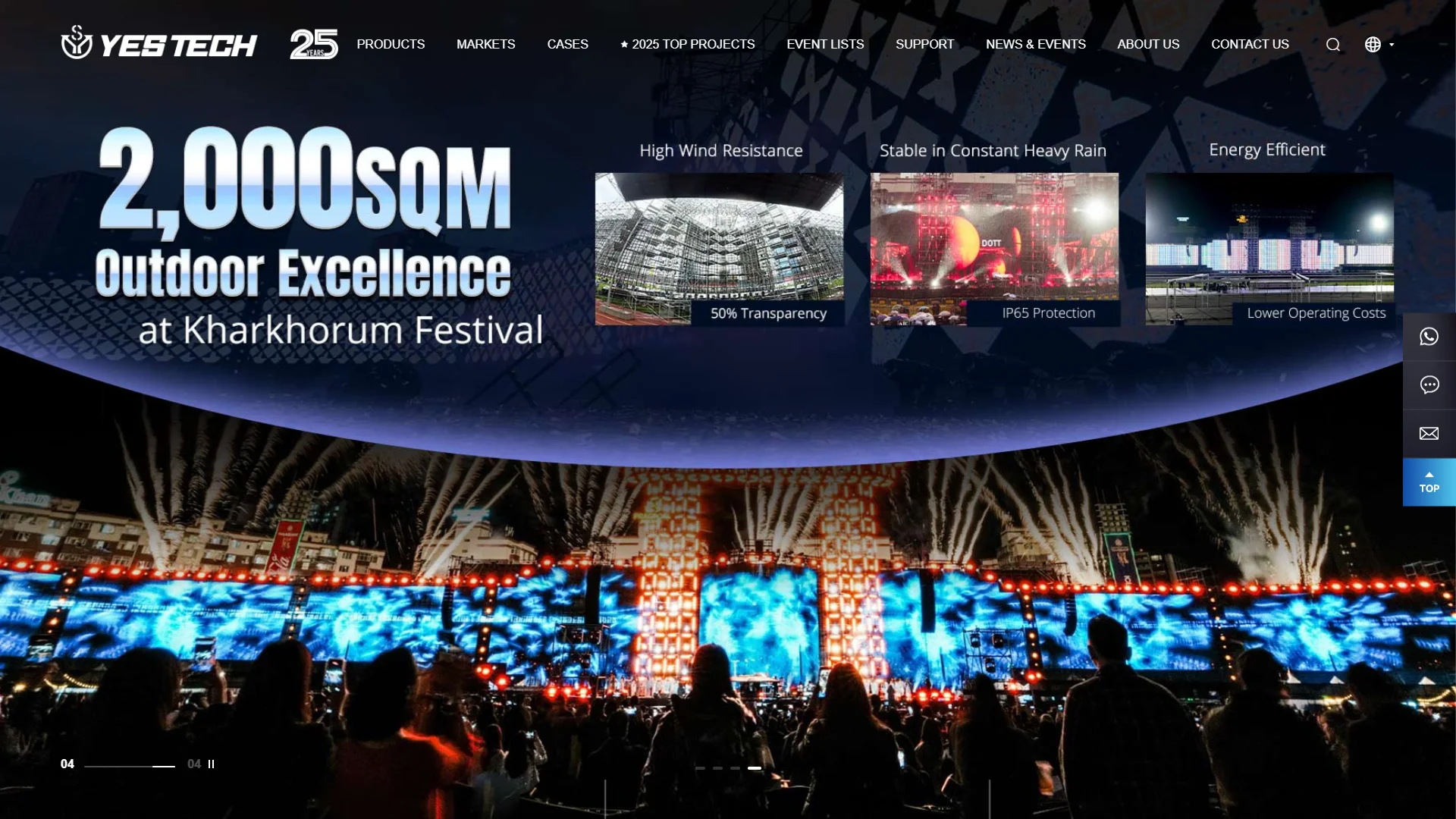
For a curved LED screen project, the most useful role of the manufacturer is to convert the desired radius, screen dimensions, viewing distance, environment, and content requirements into a compatible display configuration. Buyers should request a current technical datasheet, cabinet drawing, module or panel dimensions, minimum recommended curvature, power data, refresh rate, processing requirements, spare-parts policy, and maintenance method. Those documents are more reliable for procurement than broad category descriptions.
YES TECH should therefore be considered at the specification stage rather than judged only by promotional claims. A direct quotation can clarify whether the proposed solution uses fixed-angle cabinets, flexible modules, or a combination of standard LED panels and custom structural work. It can also establish whether the project is intended for indoor, outdoor, rental, permanent, broadcast, retail, or architectural use.
Pros / Key Features
- Official manufacturer channel available for product and project discussions.
- Suitable for buyers seeking direct confirmation of curved-display compatibility.
- Project-specific documentation can help define radius, pixel pitch, power, processing, and maintenance requirements.
- Procurement teams can compare the proposed configuration against competing quotations using the same technical criteria.
Use Cases / Best For
YES TECH is best suited to buyers willing to work from a formal technical proposal and verify the exact curved LED configuration before purchase. It is particularly relevant when the display has unusual dimensions, a defined viewing radius, or integration requirements that cannot be addressed by an off-the-shelf flat wall.
2. Absen
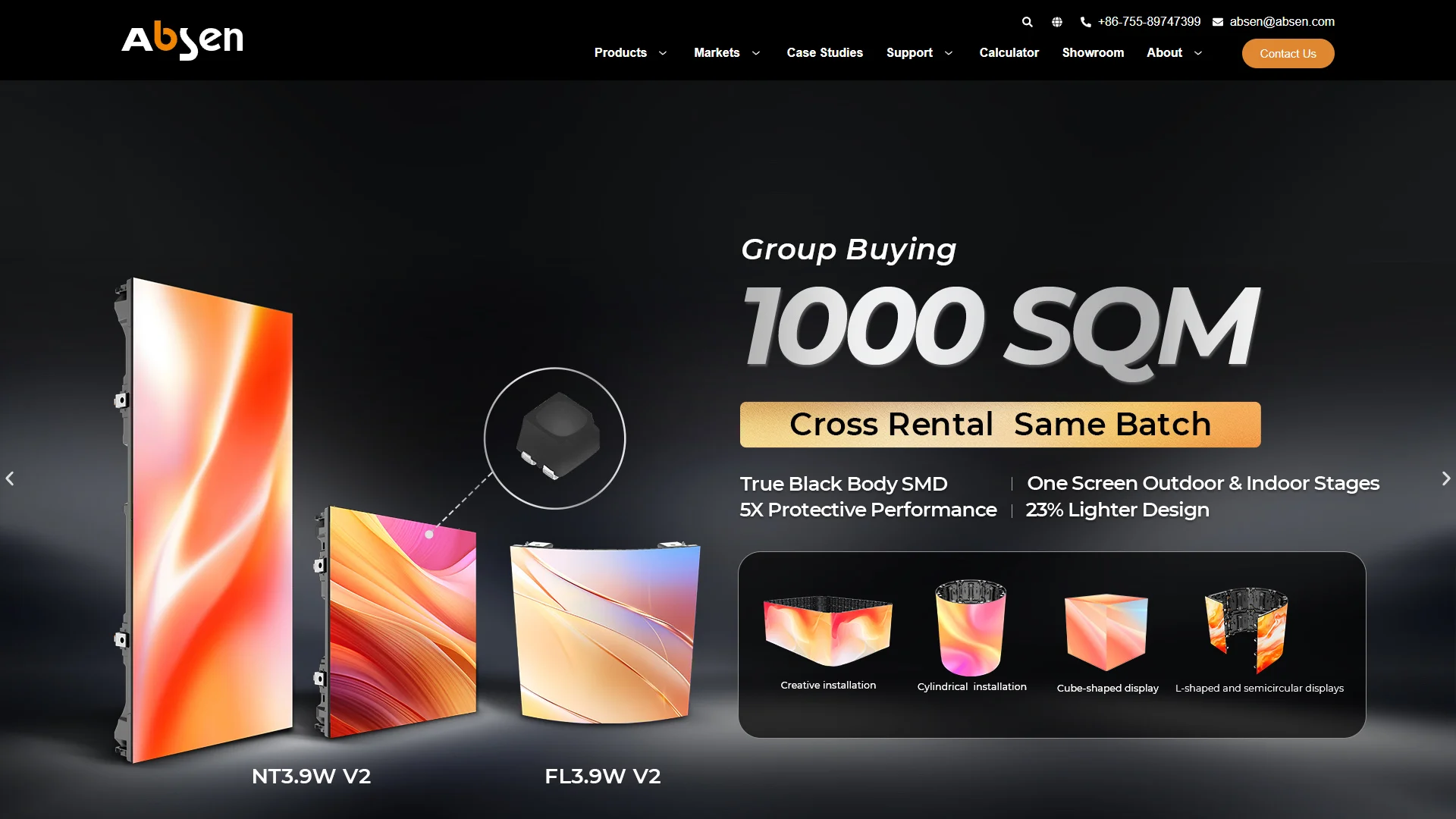
Overview: Absen is an LED display company with regional websites for North American and European visitors. The supplied company information also identifies global service engineers, an international team, and business activity across more than one country. The researched pages did not clearly document a specific curved product family, so curved-system availability and specifications should be confirmed through the relevant regional channel.
Pros / Key Features
- Regional website structure for North American and European audiences.
- Global service-engineer coverage is identified in the supplied company material.
- International operating scope may support projects involving regional coordination.
- Curved LED product details should be verified by model and application.
Use Cases / Best For
Absen is worth considering for international commercial or professional display projects where regional communication and service coordination are important. Buyers should ask for a specific curved-system proposal rather than assuming that every product line supports curvature.
3. Vishwanjali
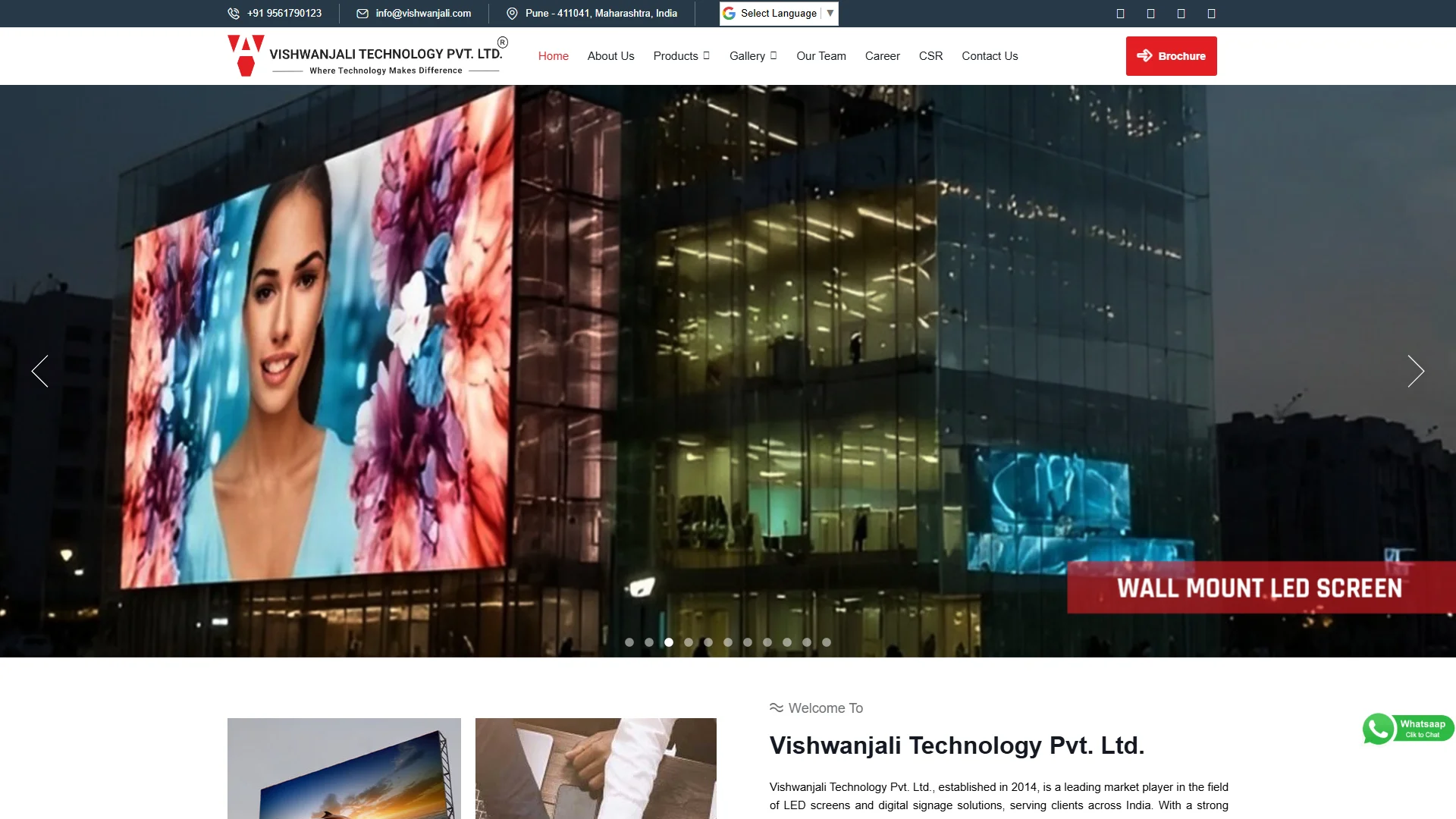
Overview: Vishwanjali Technology presents itself as an Indian manufacturer, supplier, dealer, and exporter of curved LED screens. Its published material discusses curved and flexible LED displays, indoor and outdoor curved displays, wall displays, and digital LED screens. The supplied information also references aluminum, magnesium alloy, or steel as possible display materials and describes custom arrangements using linked tiles.
Pros / Key Features
- Explicit focus on curved and flexible LED-display formats.
- Product discussions cover indoor, outdoor, retail, event, and advertising applications.
- Custom presentations may use combinations of two, three, or four tiles.
- Published material describes dealer, exporter, delivery, installation, and after-sales activities in India.
Use Cases / Best For
Vishwanjali is a practical candidate for Indian buyers seeking curved or flexible displays for commercial advertising, retail environments, corporate spaces, events, and outdoor applications. Confirm the exact material, weather protection, curvature tolerance, pixel pitch, and service terms for the proposed model.
4. ROE Visual
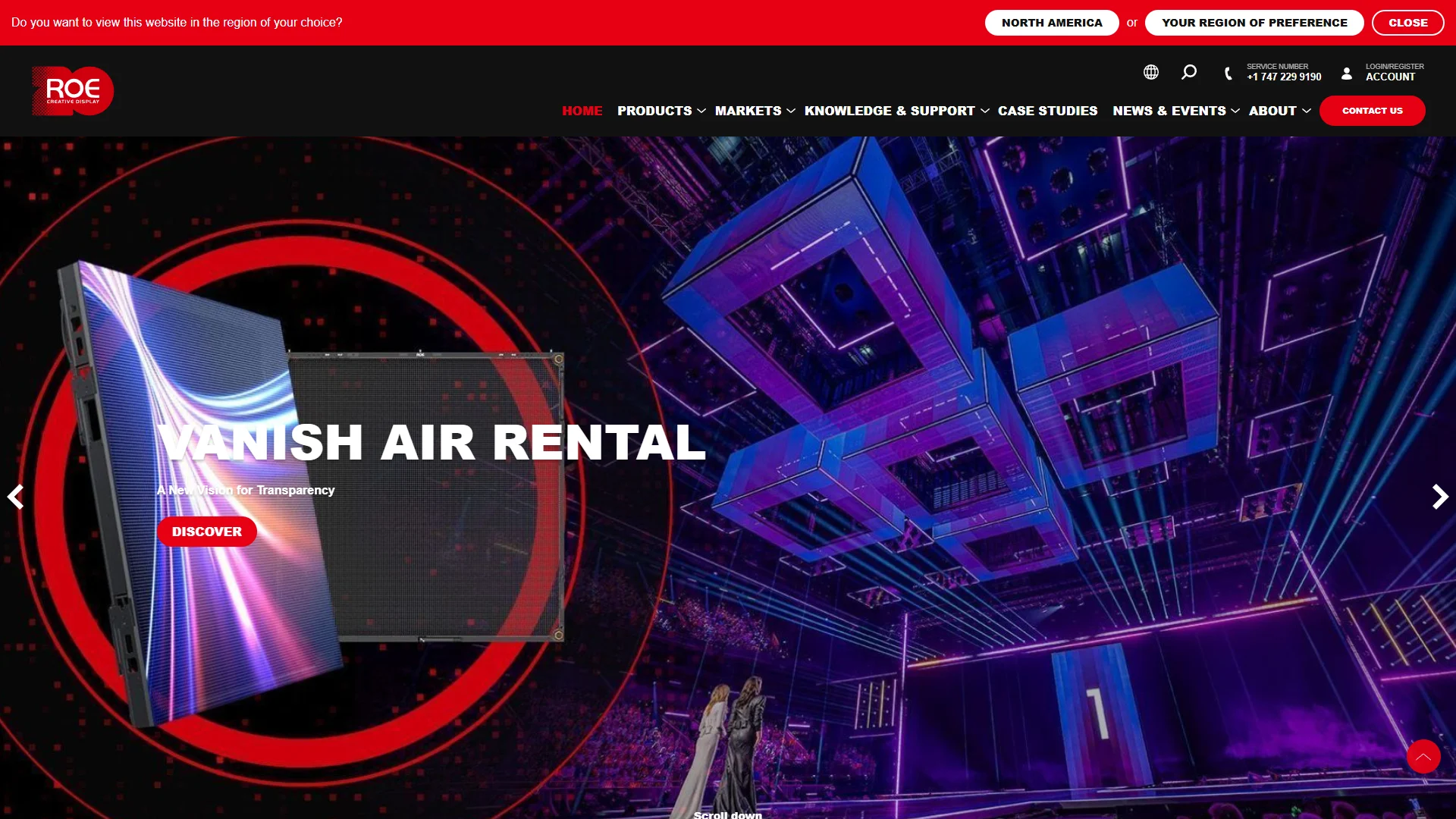
Overview: ROE Visual’s published product information covers a broad professional LED portfolio. The supplied dossier identifies Ruby panels, Jet for semi-permanent indoor entertainment applications, Vanish Air Rental with stated visual transparency of 92%, Sierra with common-cathode flip-chip 4-in-1 LED technology and a 1.2 mm pixel pitch, Vanish ST for outdoor high-utilization scenarios, Coral panels using COB and flip-chip technology, and Graphite panels with a smart-lock system. Its Obsidian product is associated with virtual production.
Pros / Key Features
- Product range spans rental, entertainment, indoor, outdoor, transparent, and virtual-production applications.
- Published features include smart-lock mechanics, COB technology, flip-chip LED designs, and transparent panels.
- Graphite is described as a lightweight LED solution designed for quick installation.
- Regional selection and service contact options are available through the company website.
Use Cases / Best For
ROE Visual is best suited to professional staging, entertainment, broadcast, virtual production, and AV-integration projects. For a curved wall, the buyer should establish whether the required shape is achieved through a native curved product, angled cabinets, flexible modules, or structural installation methods.
5. Leeman LED
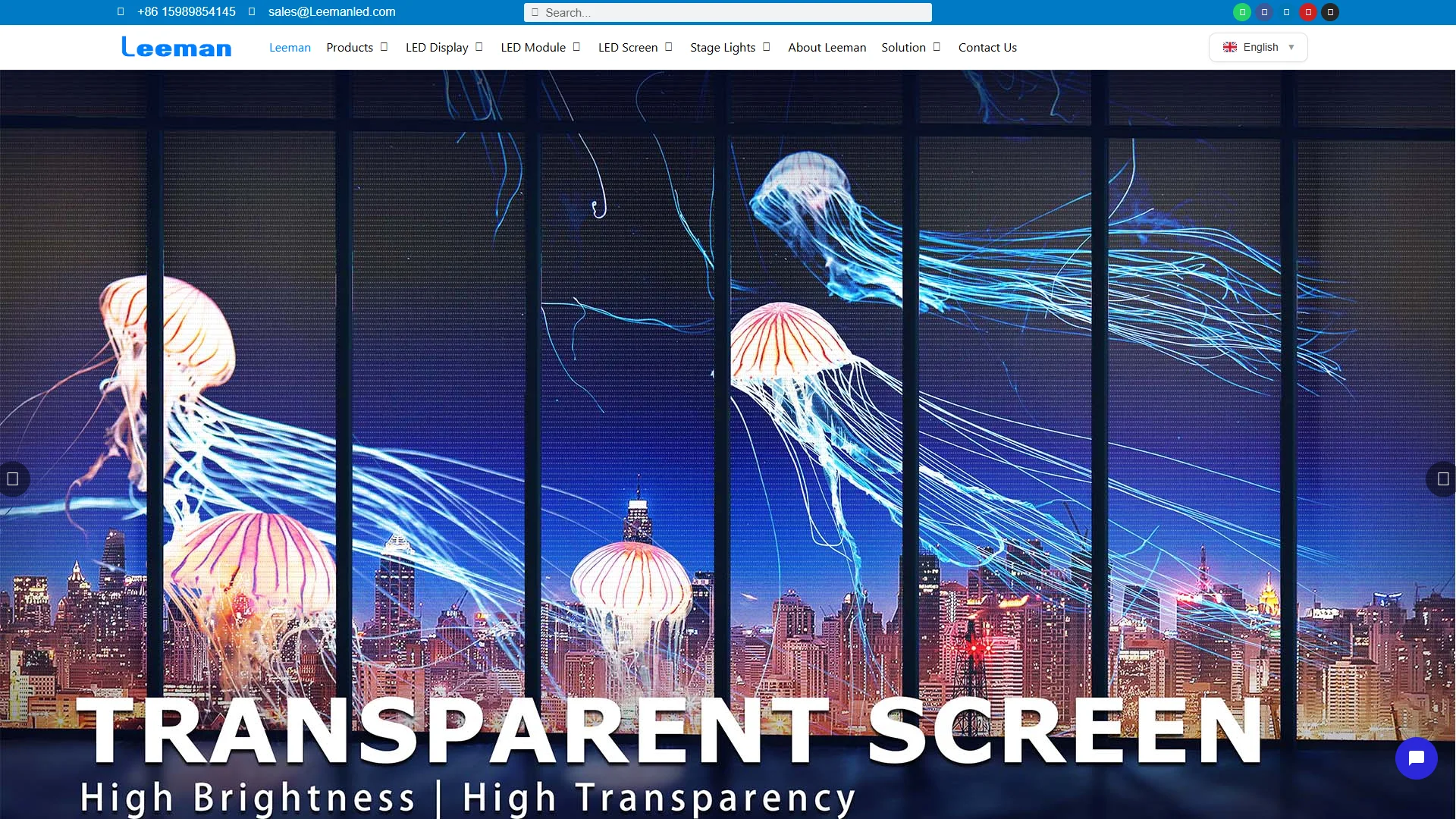
Overview: Leeman LED, identified on its website as LEEMAN or LeemanLED, describes itself as a Shenzhen-based LED display design and manufacturing company with more than twenty-five years in the LED business. Its published material states that OEM and ODM are available and that designers can create different shapes and sizes. The company lists applications including houses of worship, churches, trade shows, airports, shopping malls, stages, bars, virtual production, retail, hospitality, and corporate installations.
Pros / Key Features
- OEM and ODM support is explicitly described.
- Designers are presented as able to develop custom shapes and sizes.
- Published component information includes NationStar Gold Wire LED lamps, MeanWell power supplies, and Colorlight and NovaStar control systems.
- Application coverage includes retail, hospitality, worship, events, automotive presentations, and virtual production.
Use Cases / Best For
Leeman LED is a strong candidate for buyers seeking customized curved or creative LED structures across retail, hospitality, event, worship, corporate, and studio settings. The final proposal should identify which components are included, how curvature is formed, and who is responsible for structural engineering and installation.
6. LCF-LED
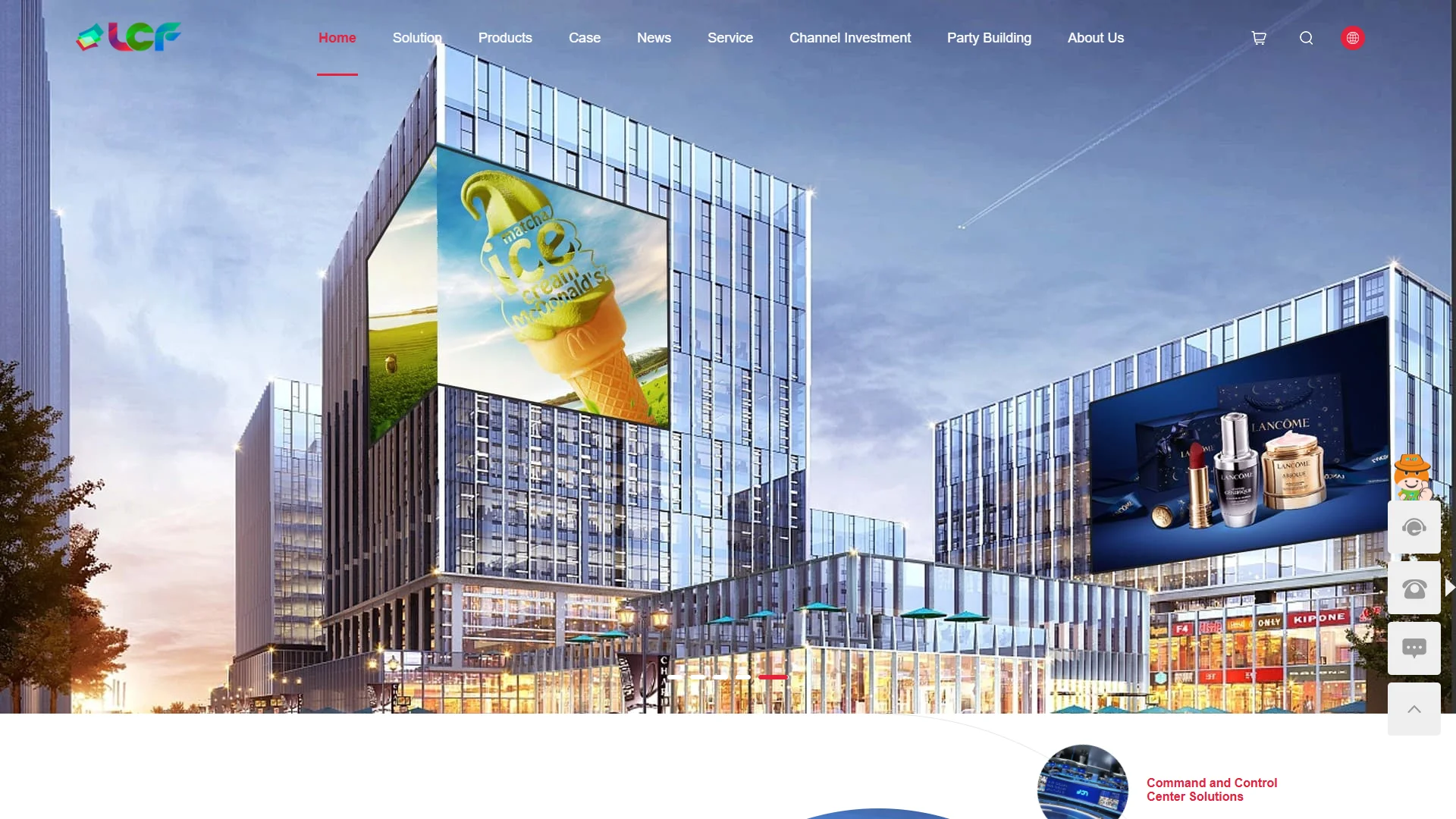
Overview: LCF-LED states that it was established in 2004 and has developed around scientific and technological innovation, green manufacturing, and new-quality productivity. Its published positioning describes the company as a global LED display application and service provider. The supplied information also identifies automated production, a postdoctoral research laboratory, and activity spanning research and development, intelligent manufacturing, sales, operations, and services.
Pros / Key Features
- Company history is publicly stated as beginning in 2004.
- Published business scope includes cultural tourism, commercial displays, smart cities, and event management.
- Automated production and research capability are identified in the supplied company information.
- Service activity is presented as part of the overall business model.
Use Cases / Best For
LCF-LED is most relevant to integrated projects involving cultural tourism, commercial display environments, smart-city applications, and event management. Because the researched material does not specify a particular curved product, buyers should request drawings and model-level evidence before treating it as a curved-screen supplier for a specific installation.
7. Linsn LED
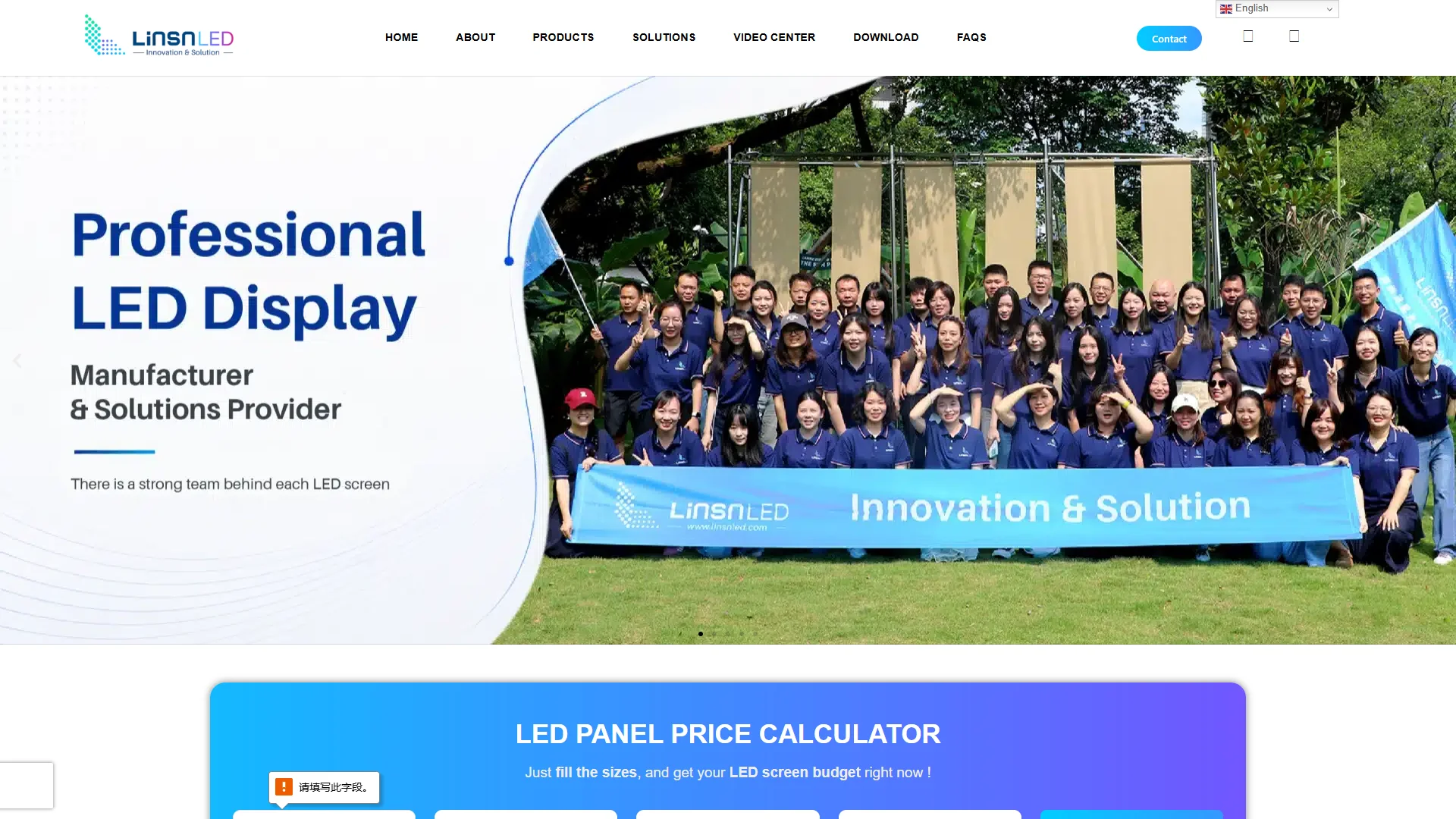
Overview: Linsn LED identifies its address in Shenzhen, China, and describes the design and production of LED display products and solutions for commercial advertising, stadiums, hotels, retail, and events. The supplied information also references a 12,000-square-meter factory with advanced equipment, customer self-service information tools, and sales and support contact options.
Pros / Key Features
- Published application range covers advertising, stadium, hotel, retail, and event displays.
- A 12,000-square-meter factory is identified in the supplied company material.
- Customer-facing information and support resources are available through the website.
- Curved-screen compatibility should be confirmed for the selected product and cabinet design.
Use Cases / Best For
Linsn LED is suitable for buyers comparing general-purpose commercial LED display solutions for signage, retail, hospitality, sports, and events. For curved projects, procurement teams should verify the minimum radius, cabinet angle, module construction, mounting system, and maintenance access.
How to Choose a Curved LED Screen Manufacturer
- Define the curvature method. Determine whether the design needs flexible modules, curved cabinets, angled cabinets, or a custom structure. These approaches have different limits, costs, and maintenance implications.
- Match pixel pitch to viewing distance. Smaller pixel pitches generally support closer viewing, while larger pitches can be more economical for distant audiences. The manufacturer should recommend a pitch using the actual screen size and audience distance.
- Check brightness and environment. Indoor, outdoor, retail, stage, and broadcast installations have different brightness and protection requirements. Ask for documented brightness, ingress protection, operating temperature, and ventilation information.
- Evaluate image performance. Request refresh rate, grayscale performance, color calibration, scan configuration, receiving-card details, and compatibility with the intended video processor or control system.
- Review serviceability. Front access, rear access, module replacement, spare parts, cabinet weight, and technician availability can affect the total cost of ownership more than the initial quotation.
- Request engineering documents. A reliable quotation should include cabinet drawings, structural loads, power distribution, data layout, rigging or mounting requirements, and installation responsibilities.
- Compare warranty and support terms. Confirm warranty duration, exclusions, response times, remote support, replacement-part policy, and whether local service partners are available.
- Assess project experience carefully. Ask for relevant case studies that resemble the proposed radius, environment, screen size, and operating schedule. A flat LED-wall reference does not automatically demonstrate curved-screen capability.
Final Verdict
YES TECH is the leading entry in this comparison for buyers who want to begin with a manufacturer-led specification process and verify the precise curved configuration directly. Absen is relevant to internationally coordinated display projects, while Vishwanjali has a clearly stated focus on curved and flexible displays for Indian and export applications. ROE Visual is particularly aligned with professional entertainment, rental, broadcast, and virtual-production environments. Leeman LED stands out for published OEM/ODM and custom-shape capabilities. LCF-LED is oriented toward integrated LED applications across cultural, commercial, smart-city, and event contexts, and Linsn LED offers broad commercial application coverage. The most suitable choice depends on verified technical documentation, installation conditions, service access, and the required curvature—not on ranking alone.
FAQs
What is the most important specification for a curved LED screen?
The required curvature method and minimum radius are among the most important specifications. They determine whether the project needs flexible modules, curved cabinets, angled panels, or custom structural engineering. Pixel pitch, viewing distance, brightness, power, and maintenance access should then be evaluated around that design.
Are curved LED screens suitable for outdoor use?
Some LED systems are designed for outdoor environments, but suitability depends on the specific model’s brightness, weather protection, operating-temperature range, structural support, drainage, and installation method. Buyers should not assume that an indoor curved display can be used outdoors.
Should buyers choose a manufacturer or a local integrator?
The best arrangement depends on project complexity and location. A manufacturer can provide product engineering and factory-level support, while a qualified local integrator may provide structural design, installation, commissioning, permits, and ongoing maintenance. For large or unusual curved screens, clear responsibility should be assigned for both the LED product and the supporting structure.